
Or Let’s Dig Into the Slavic Inspiration Behind My Dark Urban Fantasy Novel From the Cradle to the Grave

Any werewolf lovers in search of Slavic fantasy or folk horror drenched in Slavic mythology and folklore? I’ve got you covered. Let’s talk about Croatian werewolves and wolf shifters through the stories that inspired, well, my stories.
There’s this thing about Croatian folk tales that I particularly love—the amount of werewolf tales I manage to find, with so many different versions, some of which are quite bonkers, like tales where the werewolf is a waterskin filled with blood that rolls down the hill (more on that later). But most versions agree on one thing—werewolves aren’t people shifting into sexy wolves during a full moon, but a type of the undead.
So as you can see, even though a werewolf is a super common magical creature in our folklore, they’re not the kind that you would expect from pop-culture.
Our werewolves are people who come back after death. As is expected from the changing nature of folk tales where it’s very normal for them to differ between villages, and more so between regions, there are different versions of these undead werewolves. They even have different names in Croatian language. For example, the Croatian translation of the word ‘werewolf’ would be ‘vukodlak’, so we have vukodlak, but also ‘fudlak’ and ‘kudlak’ (fun fact: this is not common knowledge among Croatians, the majority only knows about the vukodlak). All of these words mean the same ravenous undead, who can, regarding the tale, be shown in a more animalistic sense, beastlike, or just a plain corpse. It’s a very thin line between our werewolves and vampires—it sometimes even feels like one and the same. So, as a writer inspired by Slavic folklore, I tend to portray werewolves as more wild, monstrous undead, describing them in animal terms, with just a hint of the vampiric, usually in bloodthirst, but I also love to add in cannibalism, because, what is more folk tale than cannibalism?
I also used the term kudlak in my dark Slavic fantasy novel From the Cradle to the Grave, both in Croatian and in the English translation, because I wanted to avoid the connotations the words ‘werewolf’ or ‘vukodlak’ would bring with their use, hinting that it’s an altogether different beast (sorry for the bad pun).
“Only once in her life did she see a kudlak and it was a healthy one, well-fed after consuming a family of four. When they’d opened his grave, his skin had still been rosy red, his furry cheeks round, his mouth full of sharp teeth.” – From the Cradle to the Grave
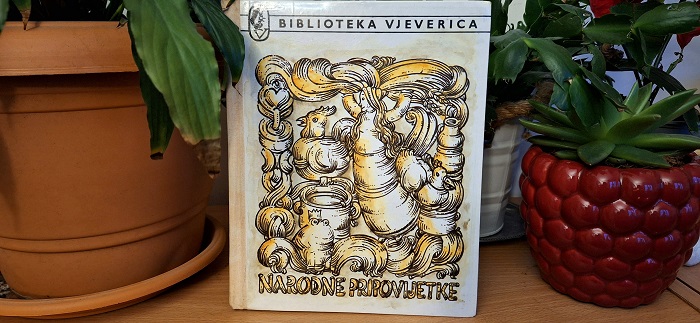
The earliest werewolf story I remember reading is from a little book of South Slavic folk tales (Narodne priče, biblioteka Vjeverica), and it was a story of a man who suddenly died and came back from the grave and continued on doing what he’d done before. He was an ox seller in life, so he came back like an undead ox seller. And nobody would have known (*cue music* they’re gonna know) if his old ox seller colleagues—who were with him when he died and who had buried him—hadn’t seen him selling oxen one day. He begged them not to tell anyone and even promised all of his earnings since, as a dead man, he didn’t need anything. They let him sell in peace, for a year, when one of them decided to go back on his word and snitched him to the priest. So the priest was like, wait a minute, he’s dead! He can’t be selling oxen. How dare he. (This is my dramatic retelling.) So the village folk gathered and did the village folk thing. They came to the graveyard and rang a bell at 5 AM, which called all the undead to go back to their graves. They found the ox seller sitting in his coffin. He was very resigned, knowing he’s done, but before they staked him, he asked who had betrayed him, and then spit on the snitch, effectively killing him, which is so funny. And also, I feel sorry for the ox seller. Nothing in the tale suggested he did anything wrong to deserve staking to the throat (it was the throat, not the heart). He just wanted to sell oxen and he even gave all his earnings away.
And while speaking of the undead, in Hrvatska bajoslovlja (lit. translation: Croatian Myths) by Vid Balog, it’s even explained that for a corpse to turn into a werewolf a cat has to scratch it. I need to point out that keeping cats away from dead bodies seems just like common sense.
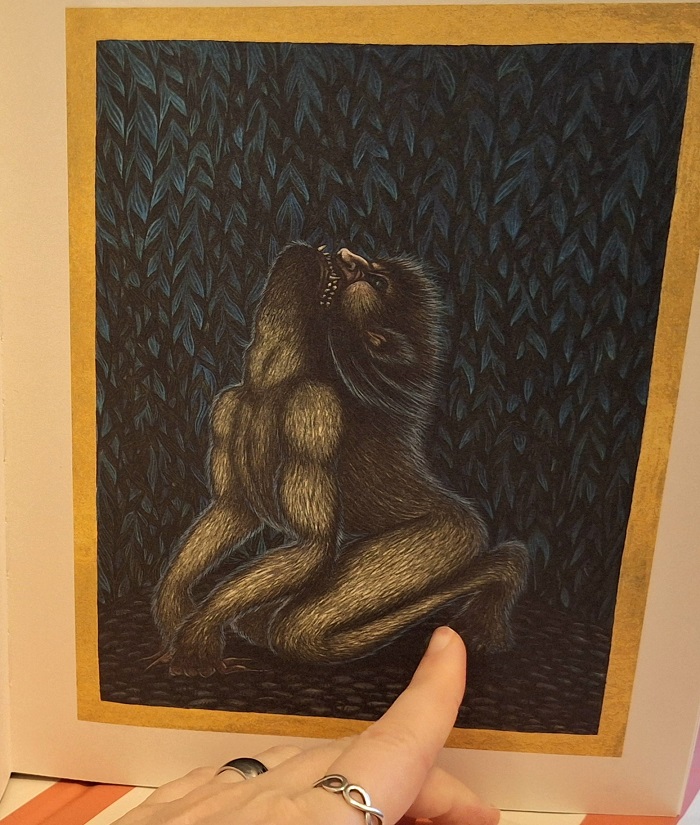
But let’s move from the undead to some of the weirder stories. The one where werewolves are people who shapeshift to donkeys or a black ram. What can I say, it’s wild here in Croatia. It’s why I keep coming back to writing about werewolves—so many different types means plenty of inspiration for different kinds of stories, for urban fantasy and horror alike. From wild and vicious shapeshifters to the straight up undead you don’t want to find in the basement. And while this text is here to explain the inspiration behind my urban fantasy novel From the Cradle to the Grave, for all the werewolf lovers, I do want to recommend my found footage folk horror novella, also known as The Lost Treasure Hunters, for some deliciously disturbing werewolf content.
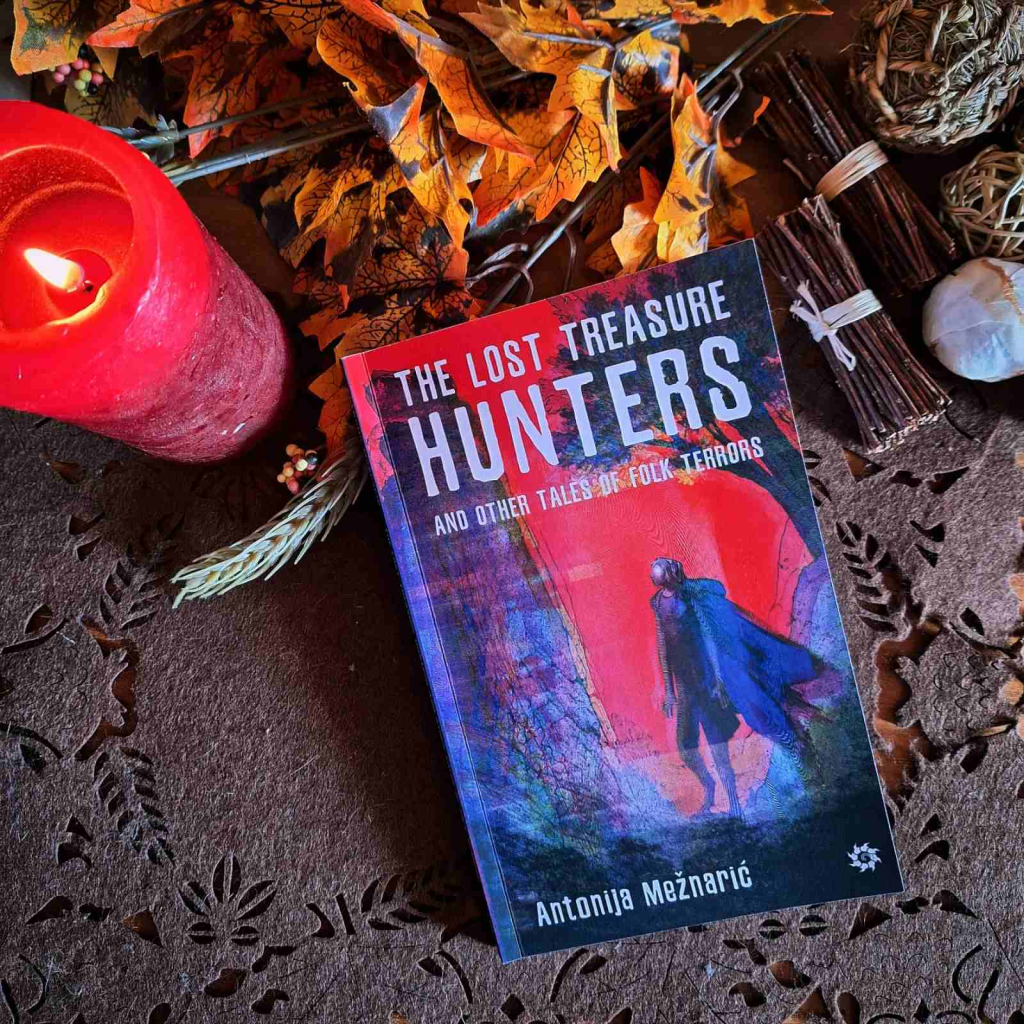
This novella was based on the oral traditions from people living on the Velebit foothills, and this is where we have all those stories with werewolves being the waterskins or the donkeys. One of the collected tales from Velebit mountain I read in a scientific paper has the werewolf start out as a black ram, and then when people let out his blood it turns out it was only a waterskin, not a ram. Another story has a person stumbling upon a rolling waterskin made of ram or billy goat hide, and stabbing it, but instead of wine (I use the term waterskin, but it was wine people carried in it), it was blood that spilled out from it. In the third tale, the werewolf is a donkey, or has a donkey’s hooves, leaving hoofprints during the night around the village. This is also the version my own grandma told me when I was a kid, when she spoke to me about a werewolf from her village who was a man who at night shapeshifted into a donkey (he got beaten up by the villagers). The werewolf in The Lost Treasure Hunters isn’t a waterskin or donkey, but I did throw in a reference to waterskins of folklore, and people who heard me telling these stories recognized the easter egg.
On that note, am I super excited that Robert Eggers is making a werewolf movie set in the 13th century? Absolutely. Given the fact he used vampires from folklore to create Orlok when writing and directing Nosferatu, I’m absolutely pumped to see what kind of folklore werewolves he’ll unearth for this new movie. I’m so ready for it.
But let’s say you want to read about the werewolf who shapeshifts into a wolf, not an undead, and not the weird waterskin thing. Then we’ll have to go to another folk tale. This one is about the divine she-wolf.
I love the divine she-wolf, to use the old meme, this mythical creature lives in my head rent free. If you know about selkies, that’s practically it, except she’s a wolf, not a seal, but the rest of the story is almost the same. It’s a wolf who can take off her wolf pelt, showing that under it she’s a beautiful woman. If a shepherd steals her wolf skin and hides it, then the she-wolf can’t shapeshift into her wolf form anymore, and has to marry him. In the story I found during my research (and stupidly didn’t bookmark it, so I can’t link it now, so you’ll have to trust my recollection, sorry), after years of marriage and having few kids, the she-wolf found her hidden pelt and put it on again, shapeshifting back to her true, wolf form. She runs away and joins a wolf pack with a wolf shepherd taking care of them, like they are a flock of sheep. Her husband manages to find the wolf pack, and the wolf shepherd tells him that if he wants his wife back, he needs to recognize her. If he points to the right wolf, she’ll return to him, if not, the husband has to go back home without his wife. In the version I read, the husband didn’t recognize her and pointed to the wrong wolf. So the she-wolf stayed with the pack. It was a very ‘good for her’ version. I usually hate these types of stories where women are being magically conditioned to marriage because some guy stole a vital part of their body, but love it when it’s not shown as romantic, and they win their freedoms back. I touch upon this issue of folkloric heteronormativity and abuse in my folk horror short story What Lies Tangled in the River Grass, which you can also find in the The Lost Treasure Hunters and Other Tales of Folk Terrors book. Which means that, in that collection, you can find both werewolf and a divine she-wolf, in two very different stories.
Since we talked about the divine she-wolf, let’s finish this text with the concept of the wolf shepherd from South Slavic folklore. I don’t have a lot to say about them, except it’s what the name says, a shepherd whose flock is that of a wolf pack, instead of sheep. He cares for the wolves and can control them. A dream job, if you ask me, for all of us who want to pet the big dog, so I said I needed to have him in my fantasy novel. And it was easy to choose to have both a wolf shifter and a wolf shepherd in the same book, to play with the dynamic of the duo, to touch upon the protectiveness and care, more so than the control. Those two characters are apparently faves to a lot of Croatian fans.
“A wolf shepherd was supposed to watch over his flock but Nana was more than aware that over the years his attitude toward Renato had changed into something new, a beast that she had no way of controlling.” – From the Cradle to the Grave
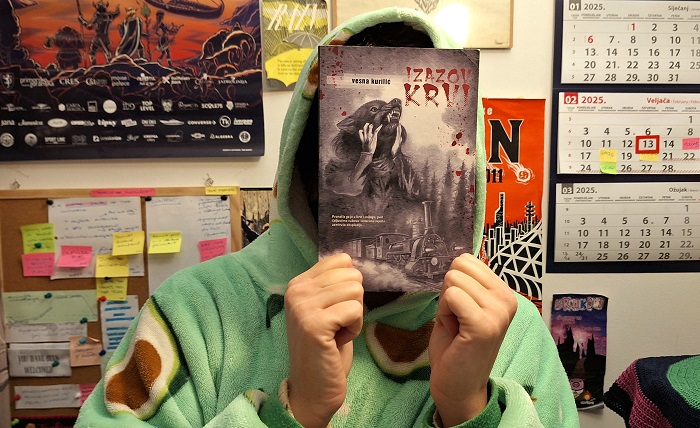
And so we come to the end. I hope you found your favorite version of Slavic werewolves. I want to shout out to the “original” werewolf lover in my life, my partner-in-crime, whose debut novel was a historical werewolf romance in Croatian, Izazov krvi (lit. translation The Challenge of the Blood). Sometimes, when I write about werewolves I feel like I’m stealing something from her. But we have such a different approach to werewolves, it’s hard to even compare. If you understand Croatian, do check out her book, especially if you’re a fan of more traditional wolf shifters—the cute, pettable type—with a twist to the usual “alpha” power dynamic of the pack, with the woman being the leader, and the love interest a human blue-collar worker who gets hurt in an attack (someone asked for hurt/comfort?).
If you’re interested in seeing how werewolves, wolves, and wolf shepherds play out in my queer, dark Slavic fantasy novel with a tablespoon of mystery and a pinch of horror, check out From the Cradle to the Grave, where the teacher-educator Nana has to keep her magical teen students in check, including a brooding wolf shepherd overprotective of his wolf.
To read more about folk tales, horror and fantasy books, get some recs, or follow my updates, sign up to my haunted newsletter.
Featured photo credit: Photo by Lisa Fotios
https://www.pexels.com/photo/man-with-a-realistic-wolf-mask-behind-the-door-13575116/
 Haunted Narratives